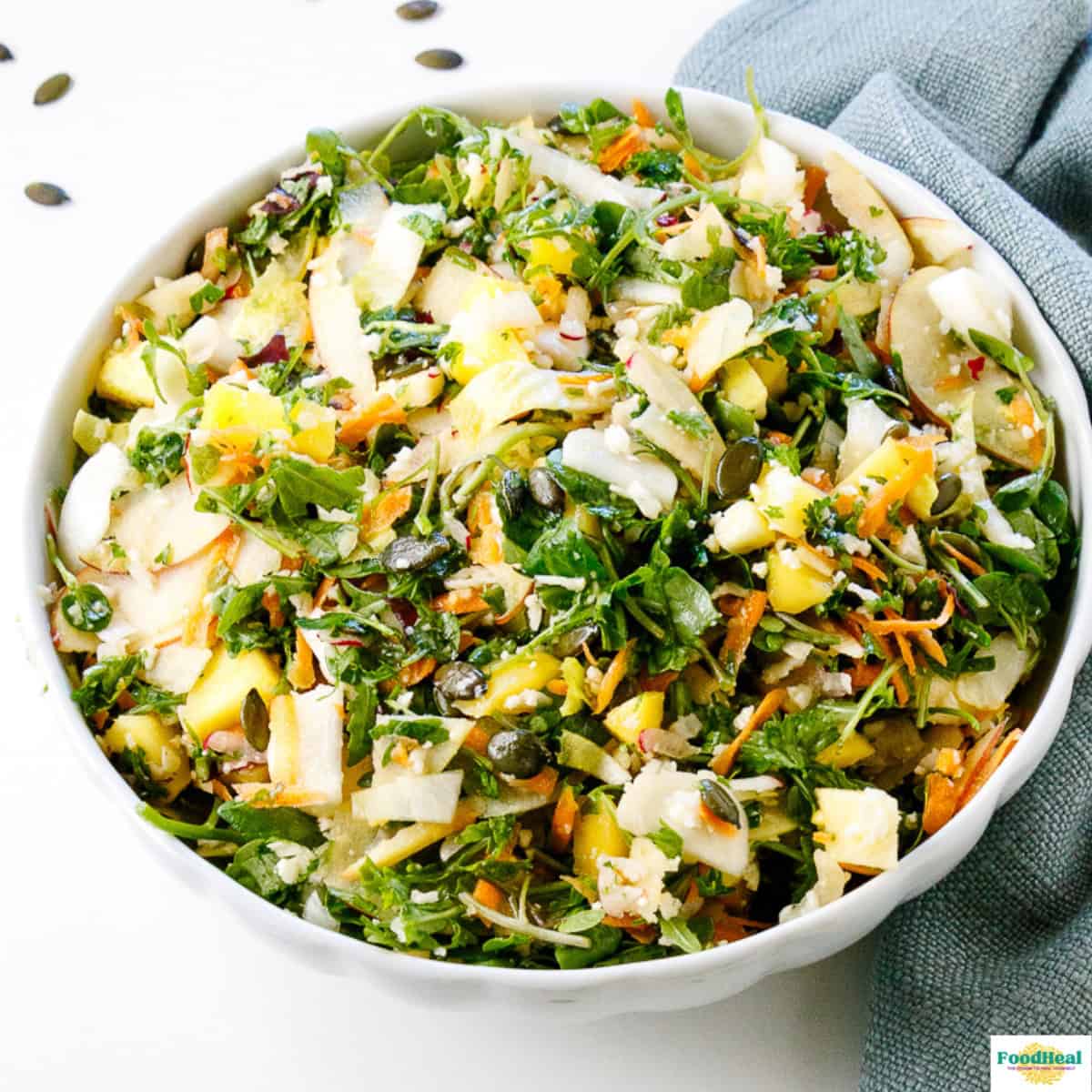
Watercress Arugula Salad
This fresh and crunchy arugula salad combines the sweetness of mango and apple with the peppery, bold flavors of arugula and watercress. Every bite delivers a balance of textures —crisp radishes and cauliflower, juicy fruit, and nutty pumpkin seeds—while flooding the body with antioxidants, polyphenols, minerals, and anti-inflammatory compounds.
Servings: 3
Calories:
Cost: $10
Equipment
- kitchen knife
- Salad spoons
Ingredients
- ¾ cup grated raw cauliflower florets
- 5 pink radishes
- 1 medium carrot
- 1 small endive
- 1 or 2 apples
- ½ a mango or a small-sized mango
- 2 cups arugula
- 1 cup watercress
- 1 tablespoon mixed seaweeds (dulse, nori & sea lettuce)
- ¼ cup chopped parsley
- 2-3 tablespoon pumpkin or sunflower seeds
- a small part of ginger
- 2 tablespoon olive oil
- some sea salt
- ½ a lemon (optional)
Instructions
- Make sure all the veggies and fruits are thoroughly cleaned.
- Use the grater to grate the cauliflower, carrot, radishes, and ginger.
- Use the vegetable peeler to slice the apples. This makes the salad easy to chew.
- Chop the endive and mango into small bites
- Use your hands to tear the arugula and watercress
- Put all the ingredients into a bowl and use the salad spoons to mix well.
- Serve and enjoy.
Notes
- Buy young arugula and watercress because they are easy to chew.
- I normally eat large portions of salads, and I found that squeezing the salad with my hands after combining everything not only reduces its volume but also makes it easier to chew.
- You can, of course, prepare the salad some hours ahead. If you want to meal prep, only prepare the ingredients; mix the salad the day you eat it. Keep in mind that chopping food starts the oxidation process, and even if the fridge slows it down, you still end up with fewer nutrients than with freshly cut.